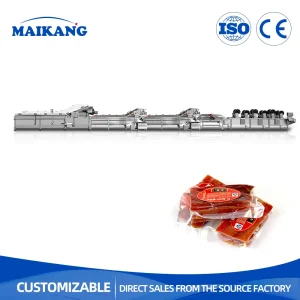
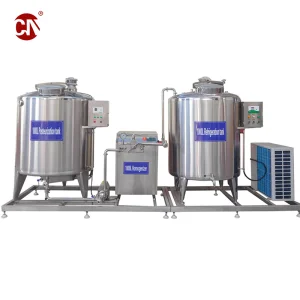
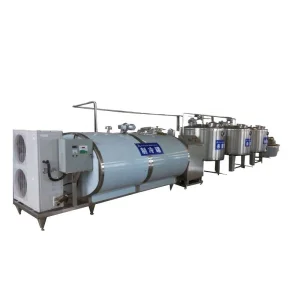
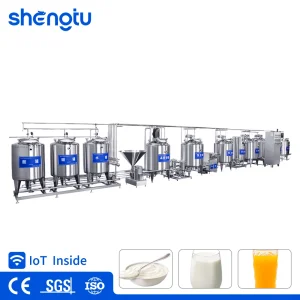
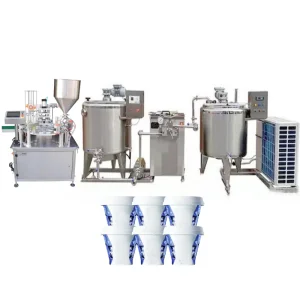
Small Milks Batch Pasteurizer Process Plant Mini Dairy Tank Machine Pasteurization Equipment Milk Production Line Price for Milk

Customization: Available
After-sales Service: Online Support, Video Technical Support
Warranty: 1 Year

Product Description

Basic Info
Model NO.
MTN-NSJ-02
Process
Thermal Processing
Power Source
Electric
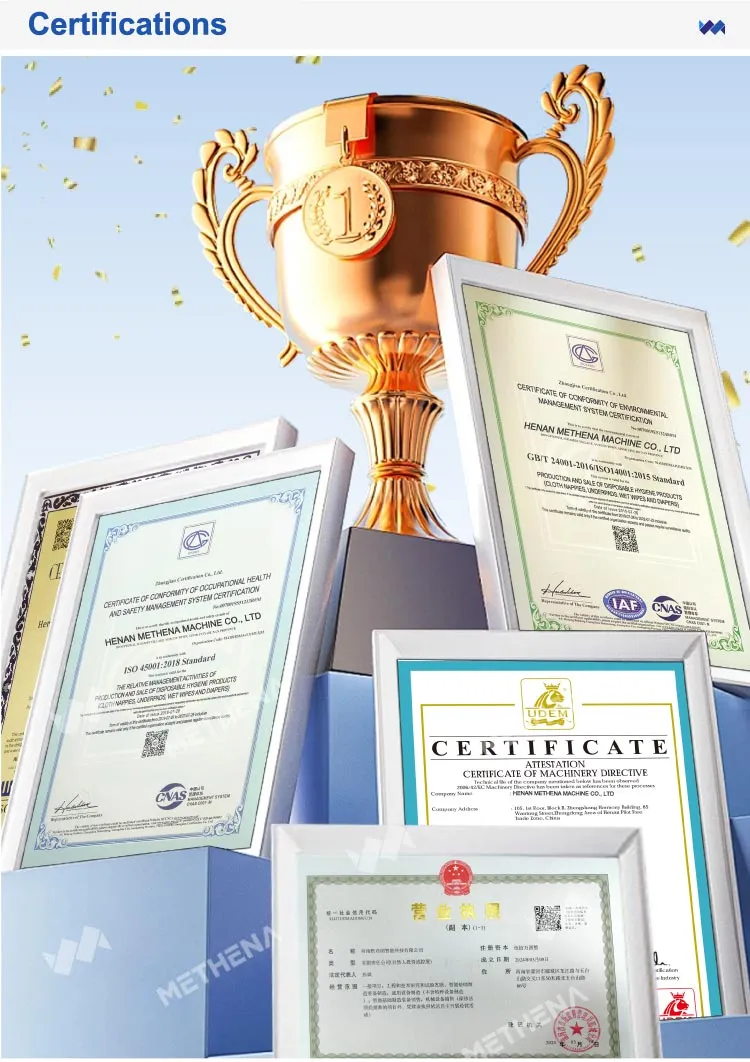
Certification
CE, ISO9001
Automatic Grade
Automatic
Application
Milk, Yogurt, Milk Powder
Capacity
300L~10000L
Material
Stainless Steel 304/316
Voltage
220V/380V Customized
Processing Types
Heating + Pasteurizing + Cooling
Product Description
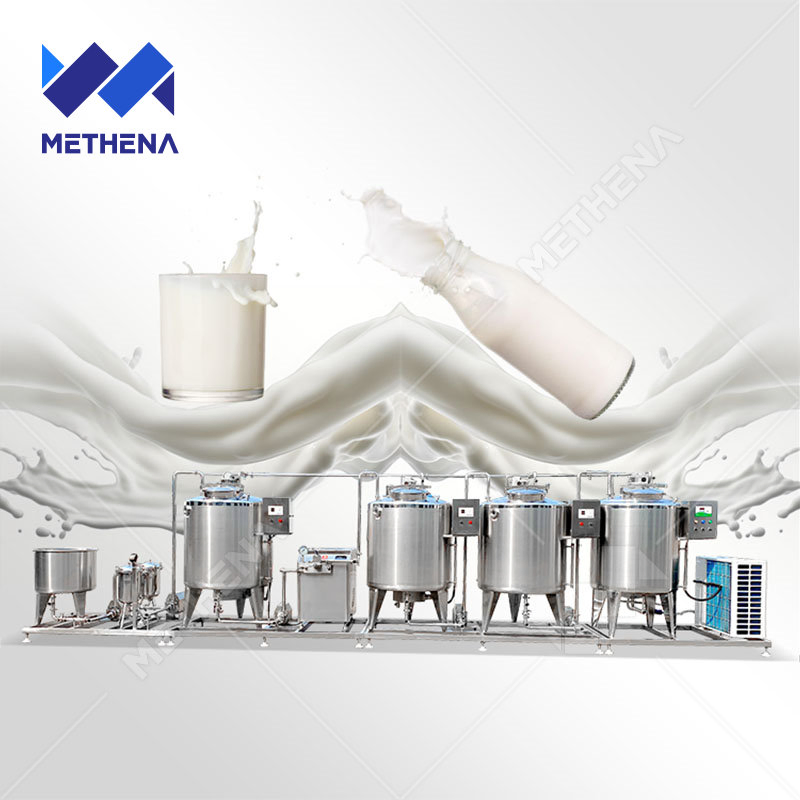
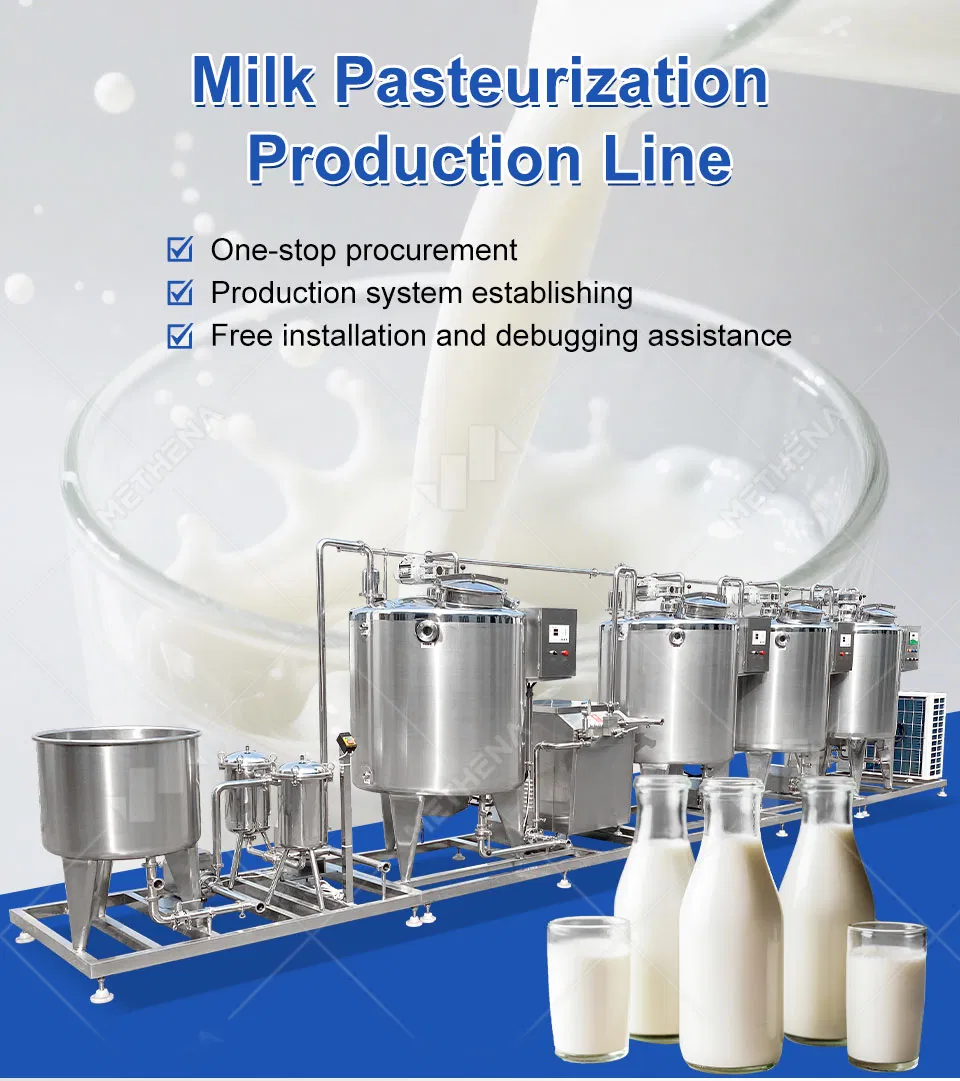
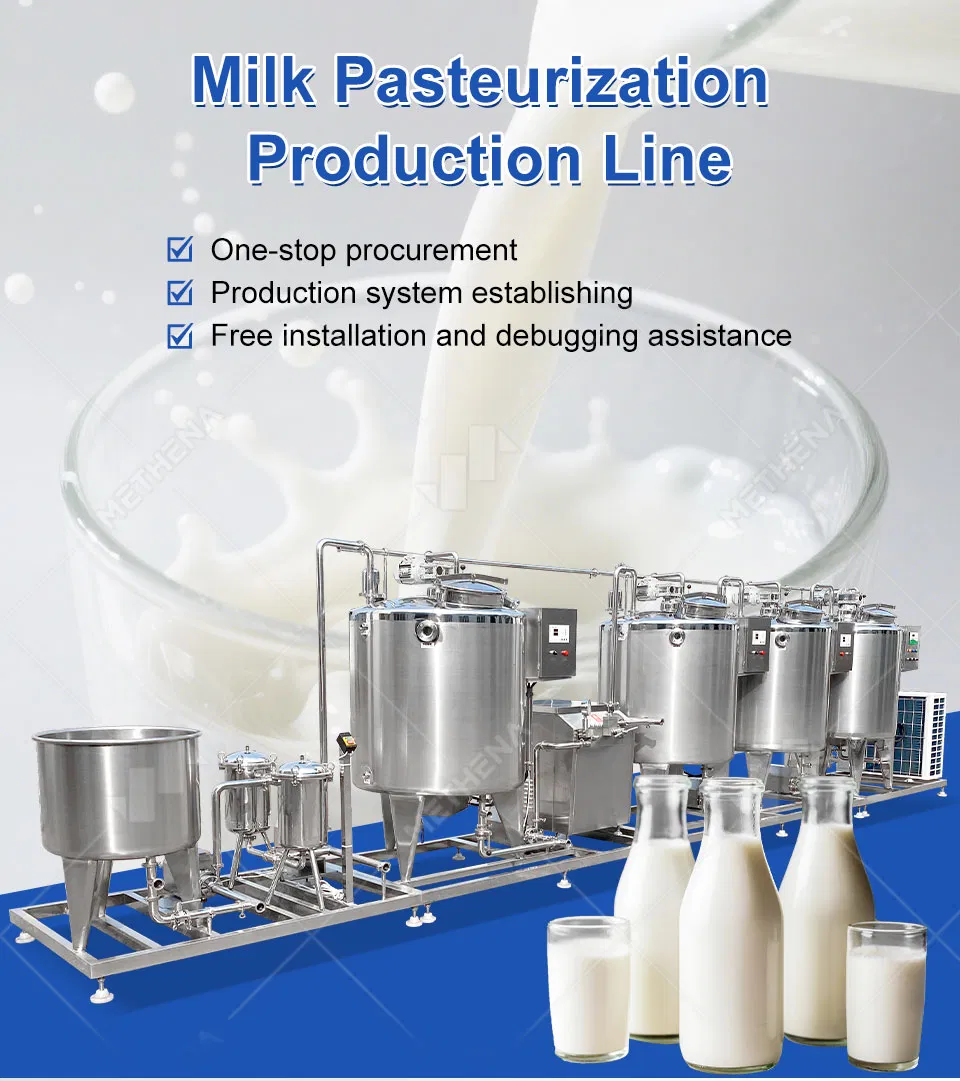
Milk sterilization production line

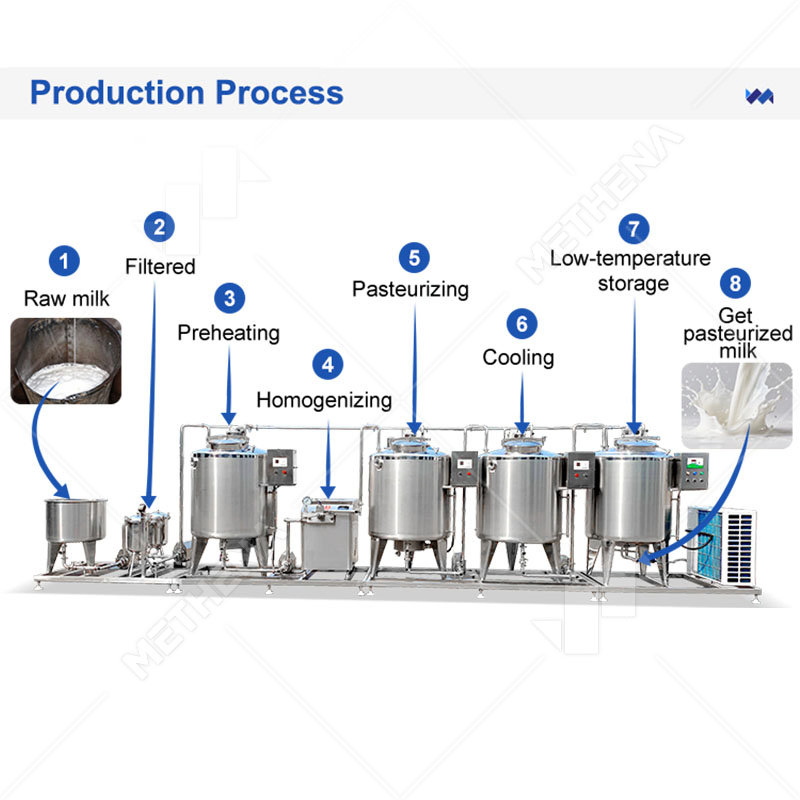
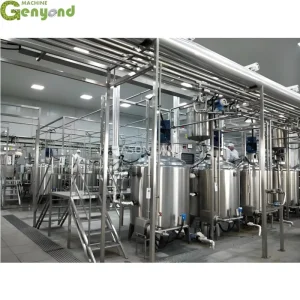
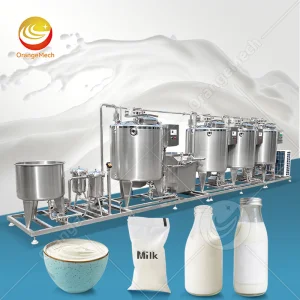
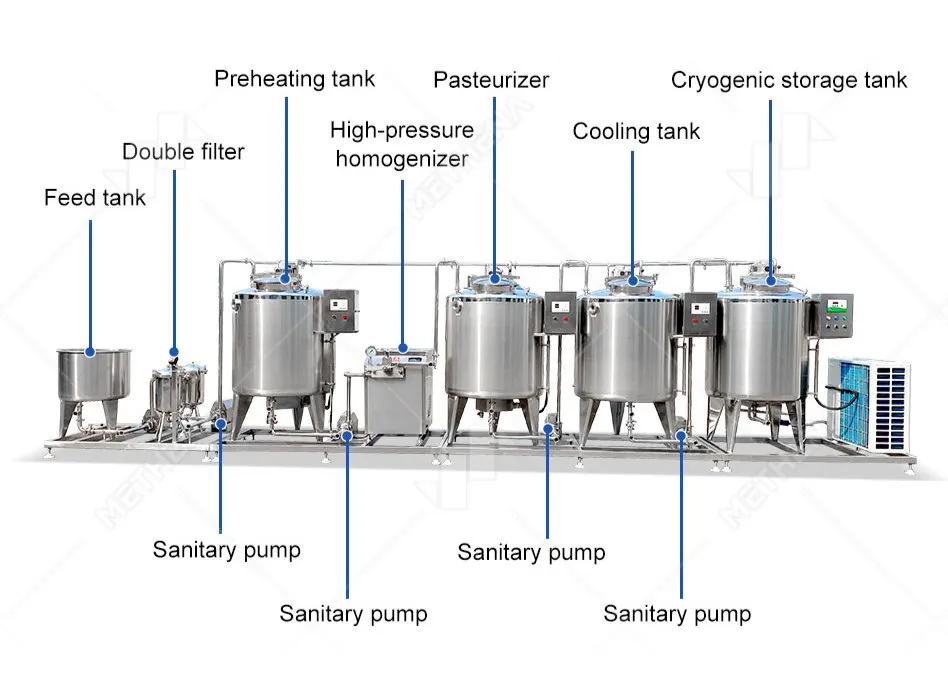
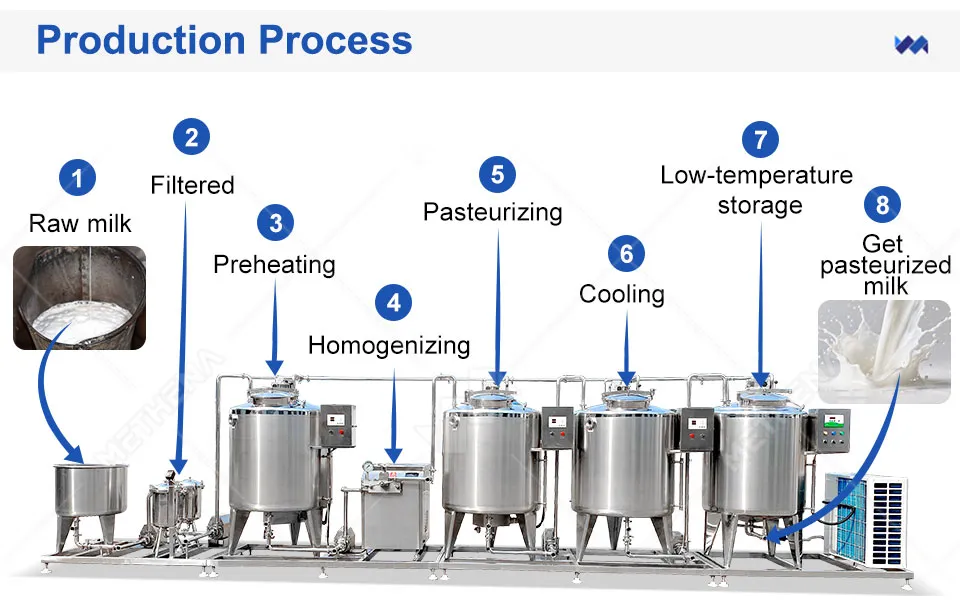
Milk sterilization production line is an automated system integrating raw material pretreatment, sterilization, cooling, filling, and cleaning. It is specifically designed for the large-scale production of liquid milk such as pasteurized milk, UHT milk, and yogurt base. It is widely used in dairy processing plants and ranch supporting projects.

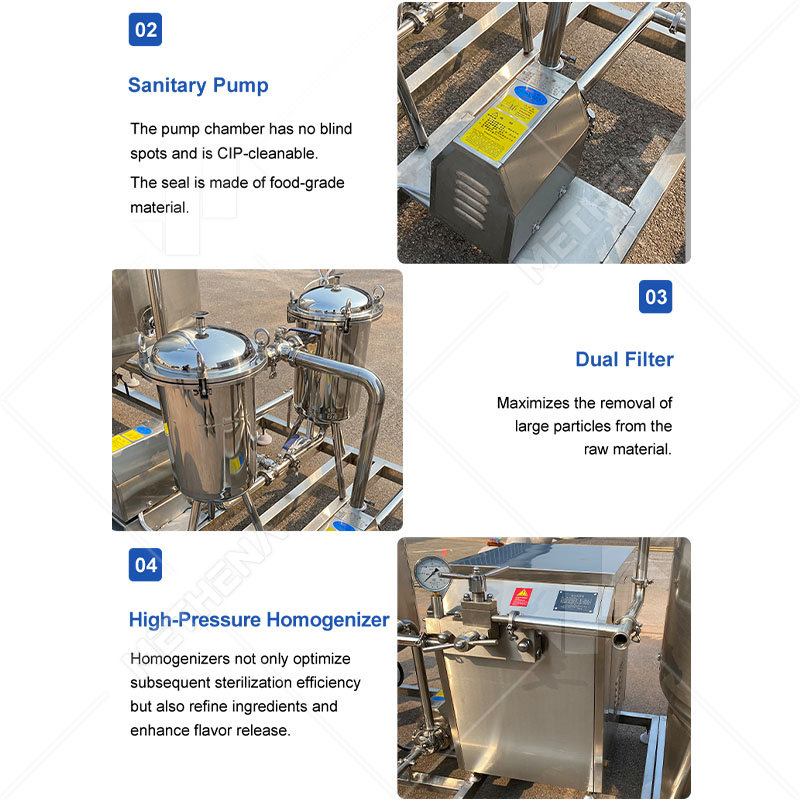
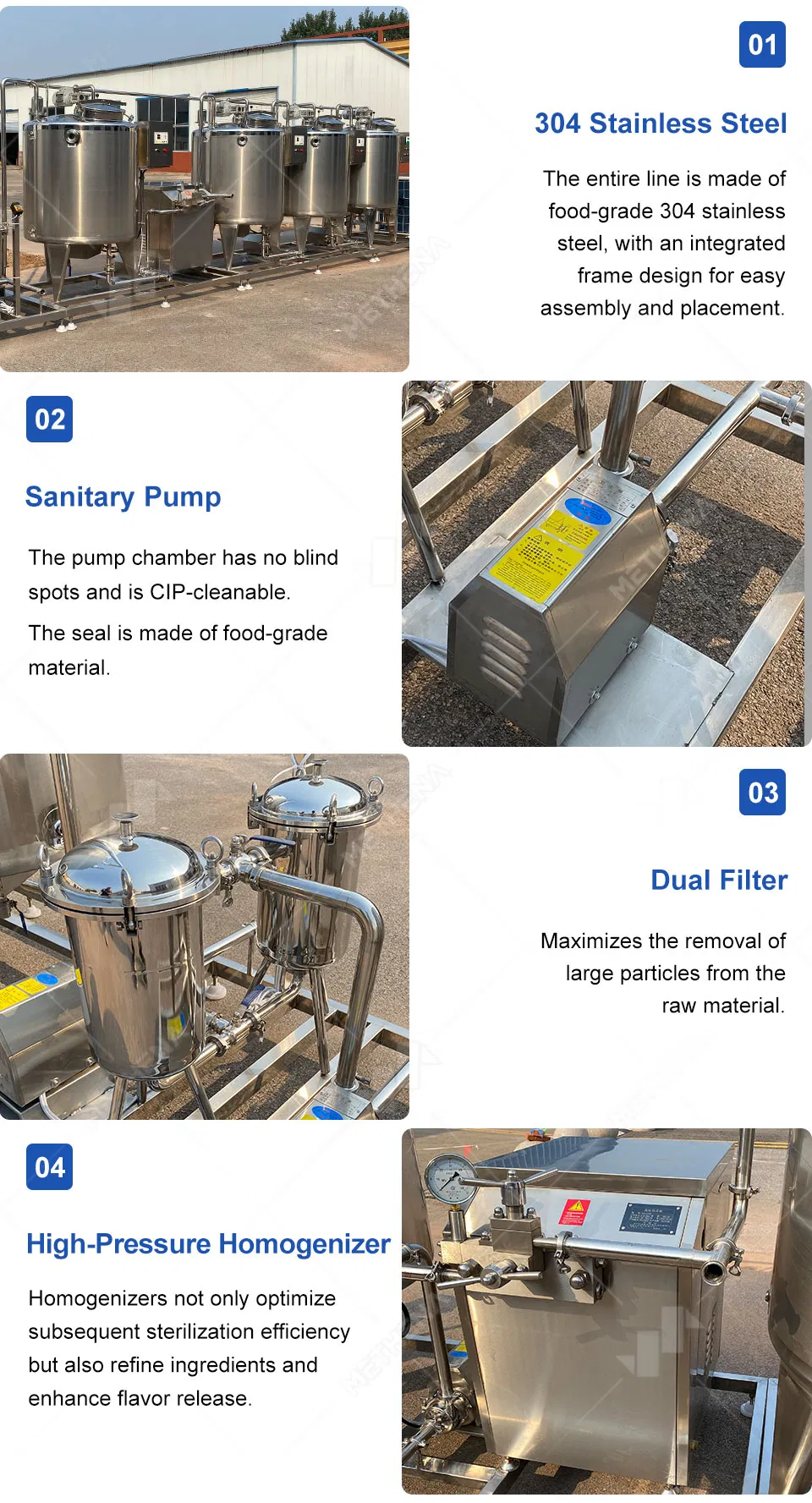
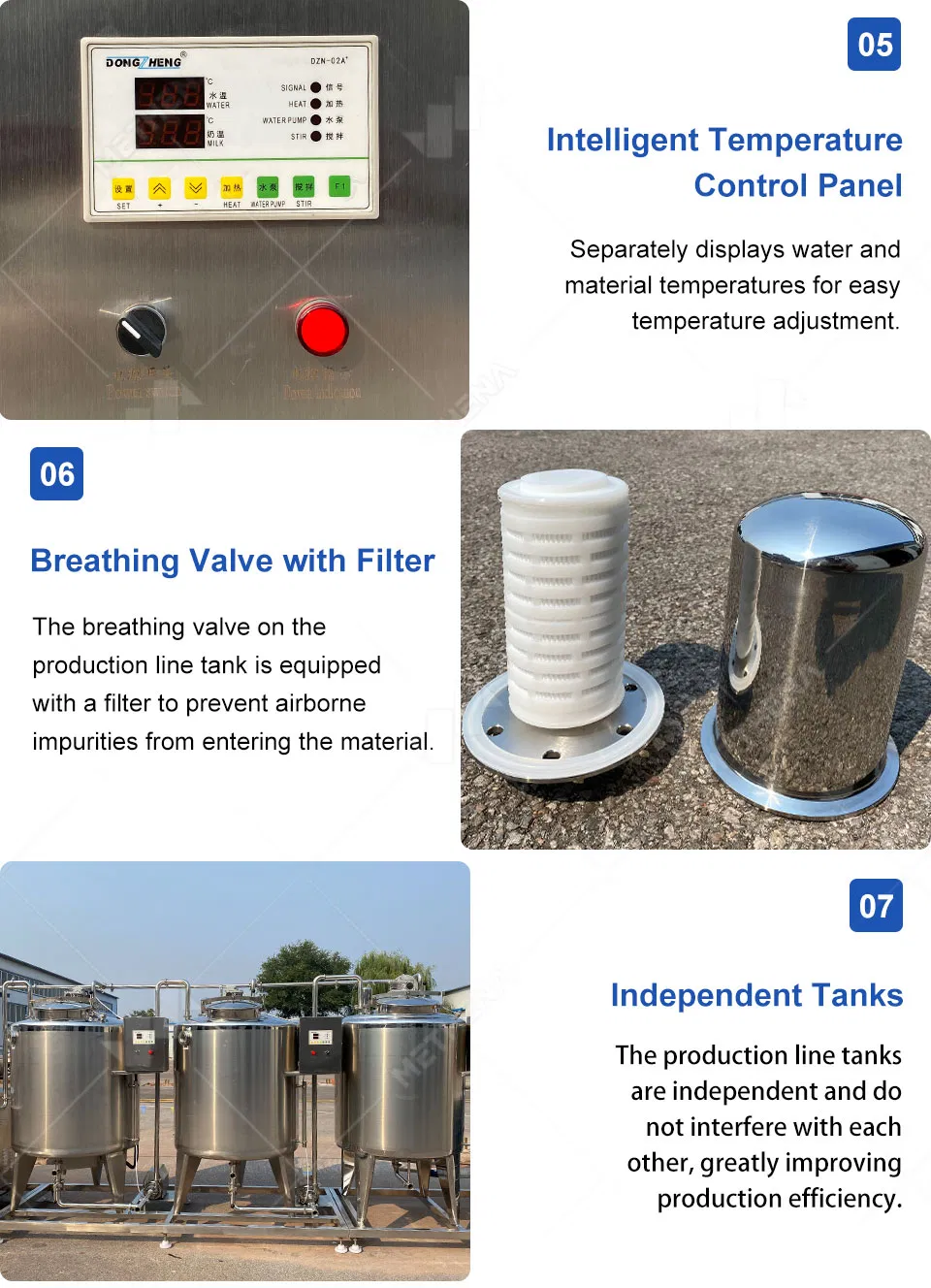
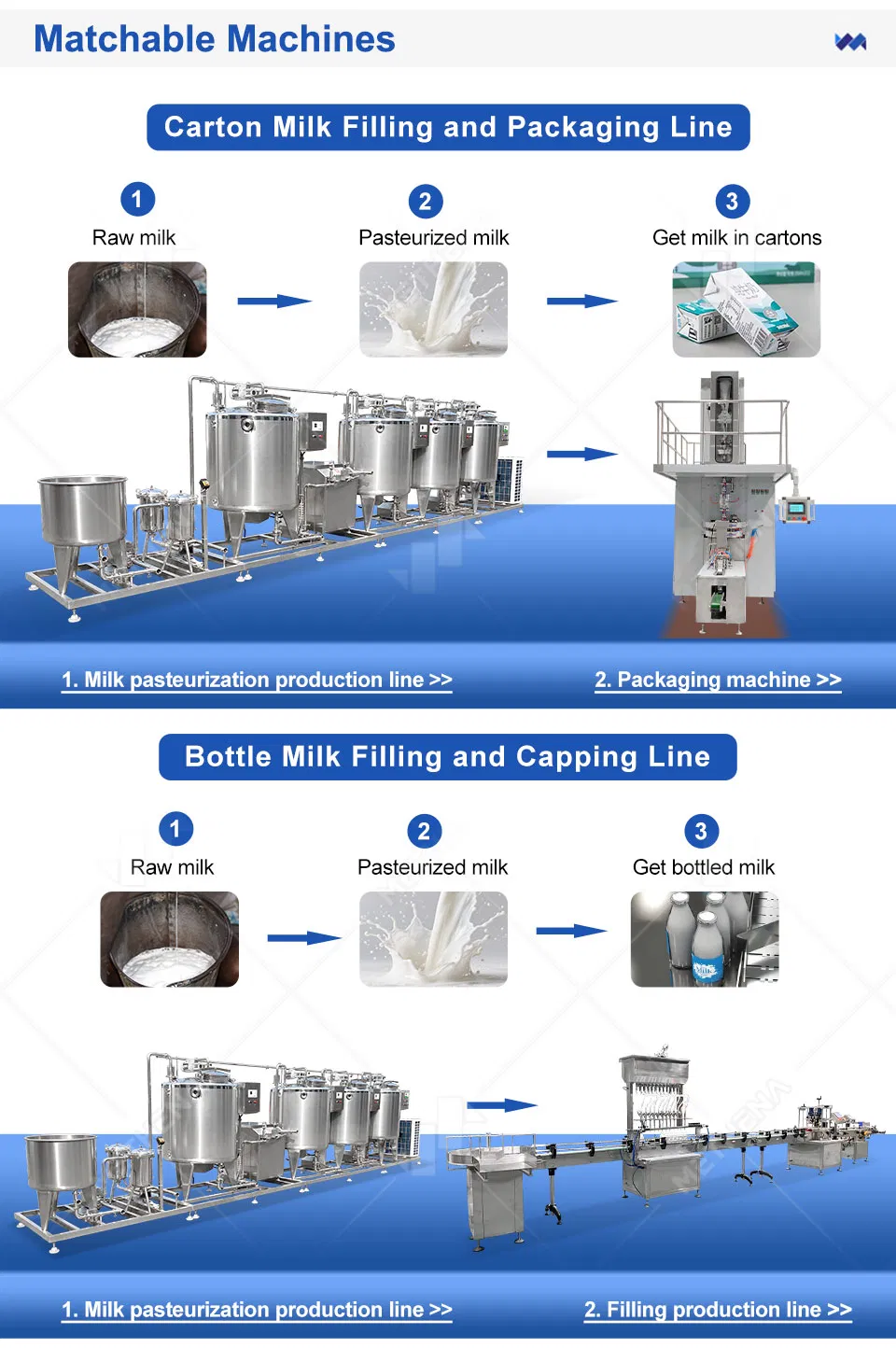
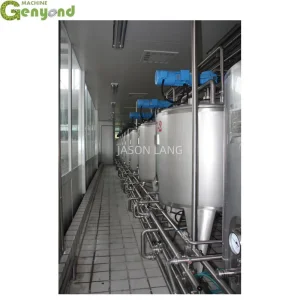
The core components consist of a pretreatment system (filtration, milk purification, and homogenization equipment), a sterilization system (pasteurization/UHT sterilizer), a cooling system, an aseptic filling system, and a CIP cleaning system. It can produce pure milk, low-fat milk, and other types of products, achieving standardized and safe processing of liquid milk throughout the entire process.
Product Advantages
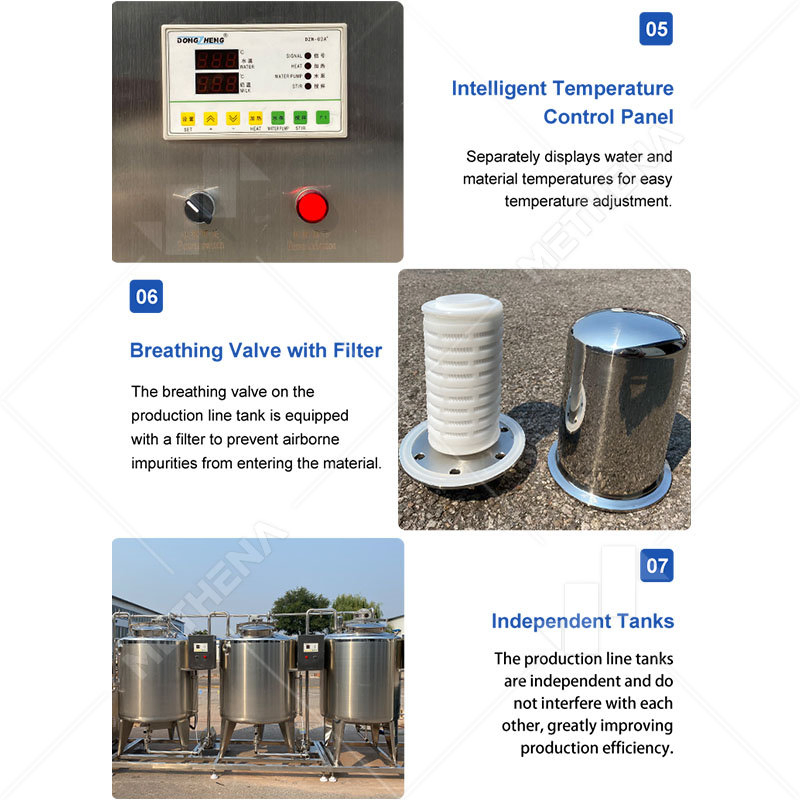
  • Supports two core processes: pasteurization (72-85℃/15-30 seconds) and UHT ultra-high temperature instantaneous sterilization (135-150℃/2-8 seconds), with temperature control accuracy of ±0.5℃.
  • Integrates fully automated operations across pretreatment, sterilization, cooling, filling, and cleaning, requiring minimal manual intervention.
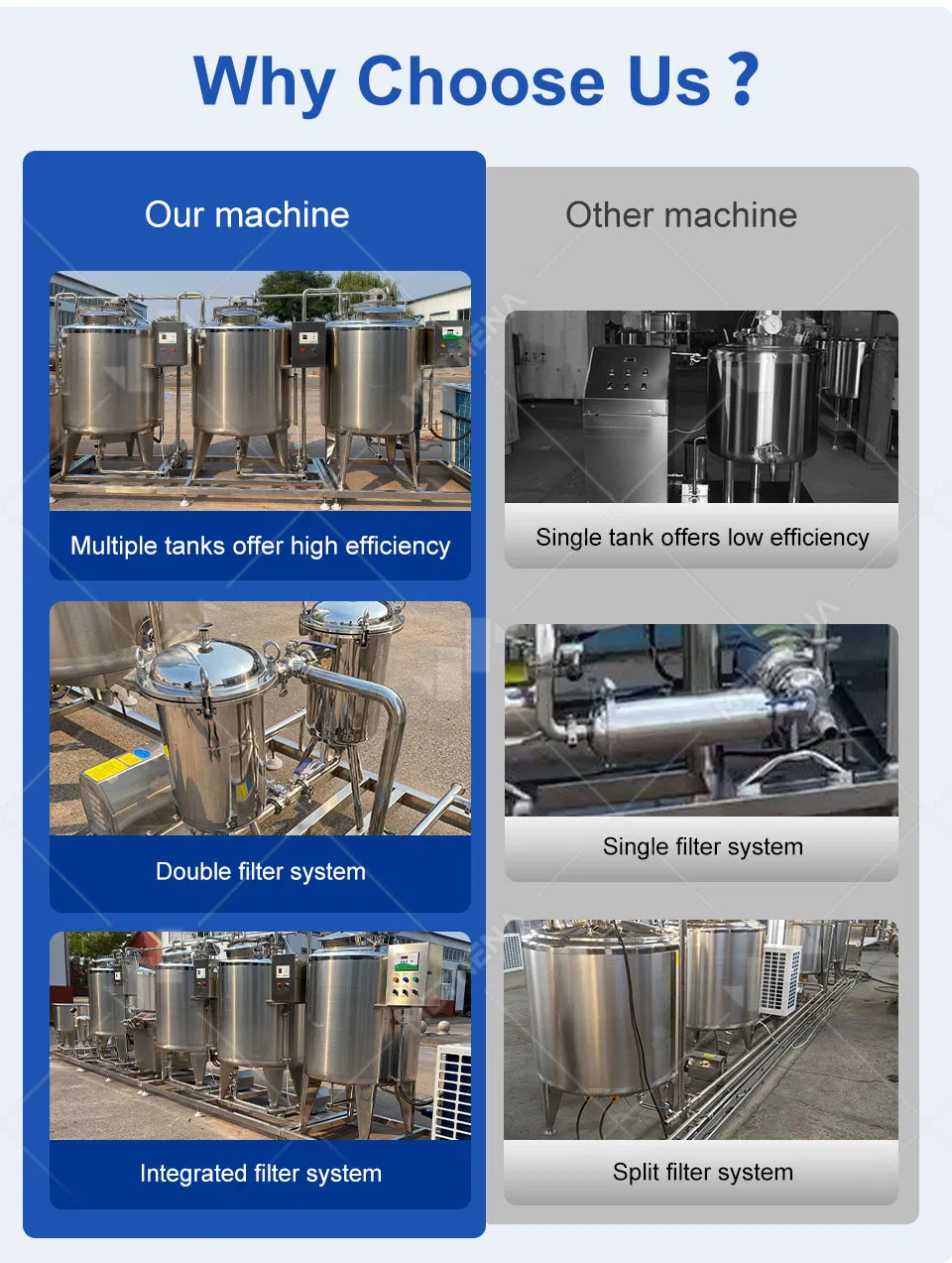
  • Small production lines have a daily output of 5-20 tons, while large production lines exceed 100 tons per day. Equipped with a CIP online cleaning system, cleaning time is reduced by 60%.
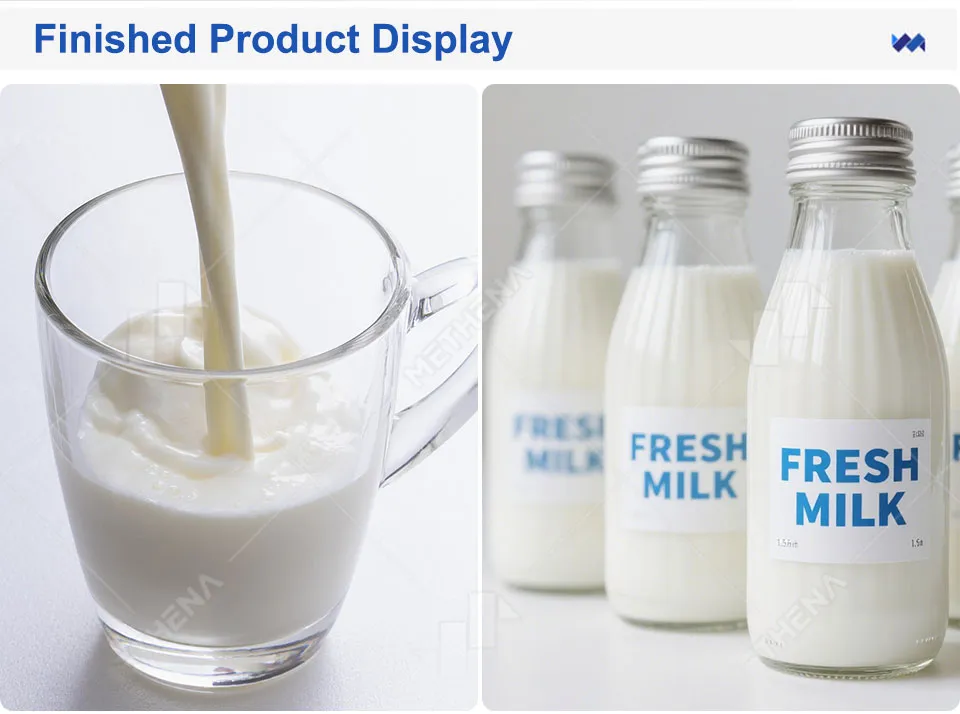
  • Capable of producing various types of milk, including pure milk, high-calcium milk, low-fat milk, flavored milk, and yogurt base.
  • Compatible with bottled, bagged, and boxed packaging.
  • Supports over 100 preset sterilization process formulas, allowing for one-click switching between product categories.
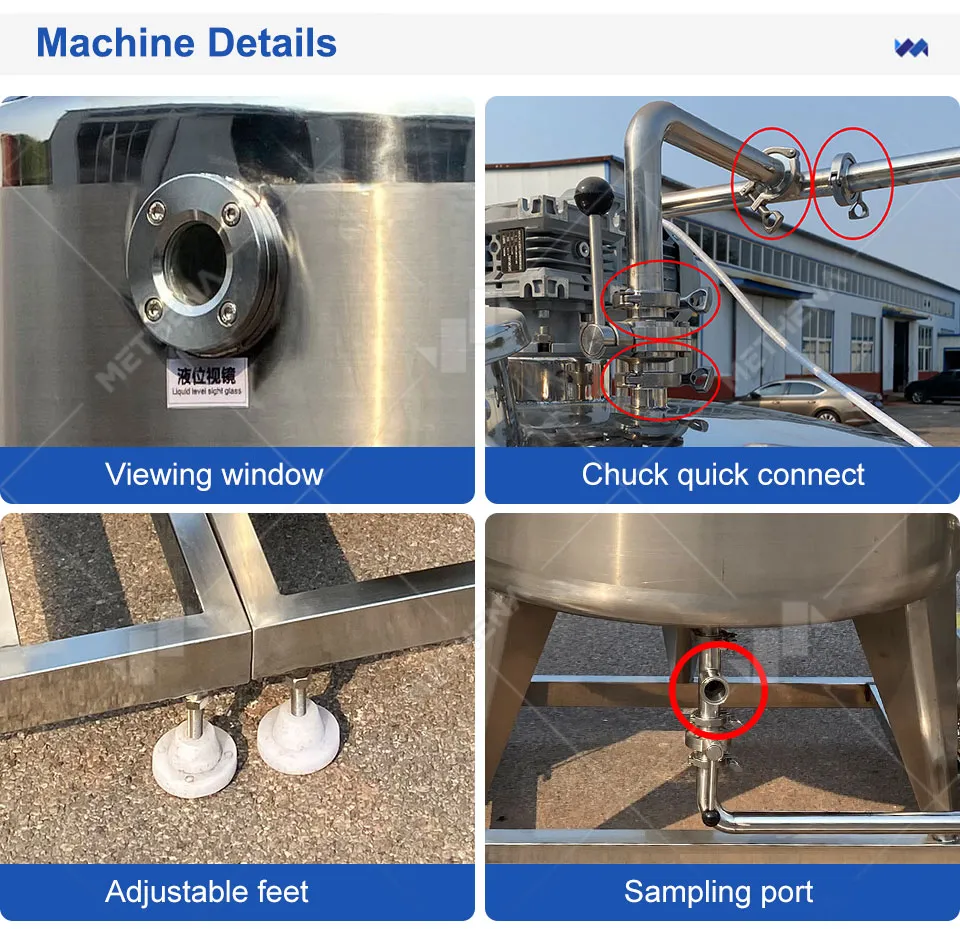
  • Food contact parts are made of 304/316 food-grade stainless steel, meeting food safety standards and facilitating easy disinfection.
Product Structure
Product Structure
Product Details
Details 1 Details 2 Details 3
Details 4 Details 5 Details 6
Details 7 Details 8
Related products
Related product

Dairy Processing Equipment

High brightness, energy saving, environmental protection, and easy installation. Warranty period of 3 years.

Related product

Storage Tank Systems

Waterproof rating of IP67 and has passed CE certification. Suitable for various factory needs.

Related product

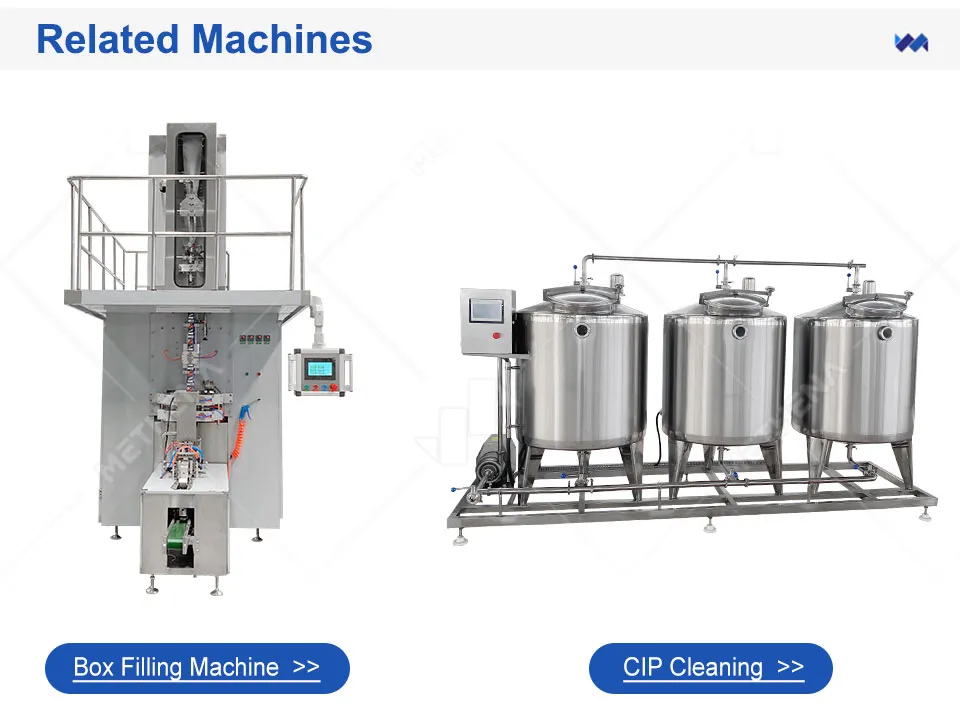
CIP Cleaning Unit

Food-grade stainless steel materials. Automated cleaning systems to improve efficiency.
Factory Images
Factory Overview
Factory detail 1 Factory detail 2 Factory detail 3
Factory detail 4 Factory detail 5 Factory detail 6
Frequently Asked Questions
What types of dairy products can a milk pasteurization production line produce?
It can produce pasteurized milk, UHT milk, yogurt base, flavored milk (strawberry milk, chocolate milk), high-calcium milk, low-fat milk, etc.
What is the core difference between pasteurization and UHT pasteurization?
Pasteurization uses a low-temperature sterilization process (72-85℃, 15-30s), preserving more flavor with a 7-15 day refrigerated shelf life. UHT uses ultra-high temperatures (135-150℃, 2-8s) for complete sterilization, providing a 6-12 month shelf life at room temperature.
Does UHT milk production require additional aseptic filling equipment?
Yes, UHT milk requires an aseptic filling system (such as Tetra Pak or aseptic bag machines) to ensure no secondary contamination. Pasteurized milk can use standard refrigerated filling equipment.
Does the equipment material meet food hygiene standards?
Absolutely. All food-contact parts are manufactured from 304 or 316 food-grade stainless steel, strictly meeting international food safety standards.
What are the easily damaged parts and their replacement cycle?
Key wear parts include homogenizing valves (6-12 months), sealing rings (3-6 months), filters (1-2 months), and heating elements (2-3 years).
How do you ensure no secondary contamination on the production line?
We utilize a closed-loop pipeline system combined with a CIP cleaning system for regular disinfection. Filling areas are protected with aseptic air to eliminate hygiene blind spots.

Related Products